
 |
 PROVEN
PAINTING POINTERS PROVEN
PAINTING POINTERS
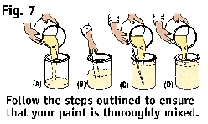
- Thoroughly mix the paint by following the steps outlined in Fig. 7. Pour off, into
another container, any thin portion of the paint that is floating on top (A). Use a paddle
to stir the paste settled in the bottom of the can (B). Stir in a small amount of the thin
portion of the paint and use the paint paddle to stir with a figure eight motion. As you
stir, gradually mix the thin portion back into the main paint can (C). Finally, pour the
paint back and forth from one container to another (D). This will thoroughly mix the paint
and bring it to the proper thickness for application.
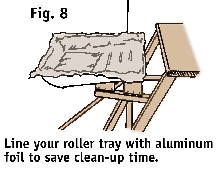
- Save a lot of clean-up time by lining your roller tray with a plastic tray liner. If you
do not have a plastic liner, use aluminum foil (Fig. 8). Press a large piece of aluminum
foil tightly against the sides of the tray. When you're finished painting, you can simply
remove the aluminum foil and throw it away. This leaves little or no clean up.
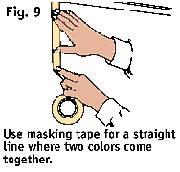
- Use masking tape where two paint colors come together for a much neater job. Apply the
masking tape at the point where the two colors join. Then remove it when the paint is dry
for a much smoother joint between the two colors than you'll get by free-hand painting
(Fig. 9).
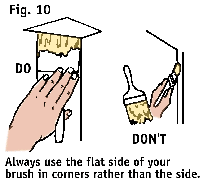
- When you're painting corners, always use the flat side of the brush (Fig. 10). Painting
with the side of the brush causes "fingering." Your paint job will be neater and
your brush will last a lot longer when you use the flat side of the brush, as illustrated.
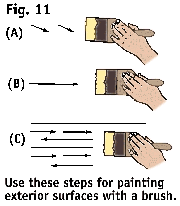
- Fig. 11 shows how to use a paint brush for best results when painting exterior surfaces.
First, dip the paint brush into the can to load the bristles about half-way with paint.
Never dip more than half of the brush into the paint. After loading half the bristles with
paint, touch the brush lightly to the surface at several points to apply spots of paint
(A). After applying the spots of paint, use long leveling brush strokes to smooth out the
spots (B). Finish each area with back and forth motions and zig-zag strokes (C). A little
practice with a brush will enable you to complete a professional-looking painting job with
minimal effort.
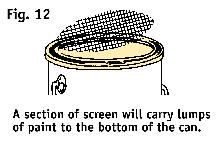
- If you've had the paint for a long period of time, it may contain impurities such as
dirt or lumps. There is no need to throw this paint away. Instead, cut a disk of window
screen to fit just inside the paint can (Fig. 12). The screen will sink down into the
paint and carry the lumps to the bottom of the can as the level of the paint is lowered.
- You can avoid paint rings and drips on the floor by sticking a paper plate to the bottom
of the paint can before you start the job. Just apply a little paint to the bottom of the
can and press the paper plate against it. The paper plate will stick to the bottom of the
can and prevent the paint from dripping onto the floor.
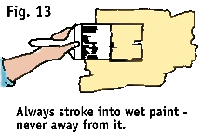
- Avoid paint ridges and lap marks on a flat surface by always stroking into the
wet paint area, never away from it (Fig 13). Blend each stroke of the brush toward
the wet paint area, bringing the layer you're applying into the wet paint previously
applied.
- If you are planning a small outside painting job, you may be bothered by insects flying
into the newly applied paint. To avoid this problem, add a small amount of insect
repellent to the paint when it is mixed. Do not use too much - a small amount will do the
trick without damaging the color or quality of the paint.
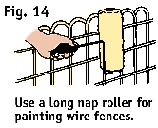
- Paint wire fences with special, long nap rollers (Fig. 14). As this type of roller is
pushed across the face of the wire fence, paint is applied to the front and sides of the
wire. Repeat on the opposite side and the job is done. The fence can be painted in almost
a single stroke if the correct roller is used.
- When you're painting with a roller, start the job by making several criss-cross strokes
on the area to be painted (Fig. 15). After you've made these strokes, continue to work up
and down to spread the newly applied paint evenly over the area. For painting trim work,
use a special trim roller or a brush.
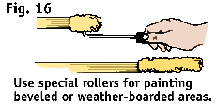
- You can purchase special rollers for painting beveled or weather-boarded areas (Fig.
16). Use a special "doughnut-shaped" roller to paint the underedges of weather
board. Use a wider type roller for painting the main surface area. By using rollers of
these special types, you can paint the entire exterior of the house without touching a
brush.
|

 PREPARE
THE SURFACE BEFORE PAINTING
PREPARE
THE SURFACE BEFORE PAINTING  CLEANING
UP AFTER THE PAINT JOB
CLEANING
UP AFTER THE PAINT JOB